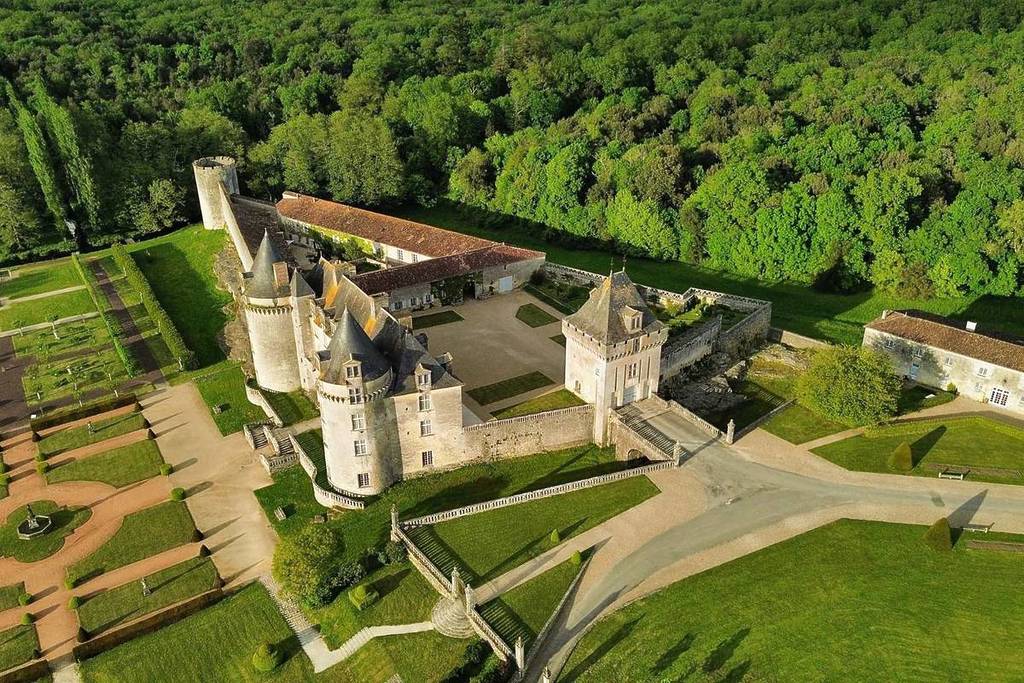
A few miles from the ocean, in the heart of Charente-Maritime, stands an exceptional estate. Between French gardens and prehistoric caves, the Château de La Roche Courbon has elegantly stood the test of time. Nicknamed the “Sleeping Beauty Castle,” it has been a medieval fortress, a refined residence, and then an abandoned ruin. Today, this unique place combines heritage, nature, and family adventures less than two hours from Bordeaux.
A castle with an eventful history
Built in the 15th century during a period of conflict, the castle was once a medieval fortress. With its massive keep, imposing towers, and natural protection from the surrounding marshes, it was not until the 17th century that Jean-Louis de Courbon transformed it into an elegant residence. At the height of its splendor, the Château de La Roche Courbon was adorned with sumptuous French gardens even before those of Versailles were created.
However, the 19th century marked a slow decline for the estate. Sold at auction after the Revolution, the château was gradually abandoned. Enamored with the beauty of the site, which he nicknamed “Sleeping Beauty’s castle,” the writer Pierre Loti launched a famous appeal to save it. Paul Chénereau responded by buying it in 1920. He then undertook a vast restoration project and opened the estate to the public. Despite trials and tribulations, such as fires and the German occupation, the site and its gardens have been revived thanks to the Chénereau family, now in its third generation. Between the restoration of the towers, the creation of a chapel and a theater, and the rebirth of the gardens under the aegis of architect Ferdinand Duprat, the estate has undergone a veritable metamorphosis.
Miraculously preserved gardens and an archaeological site dating back more than 120,000 years
 © Leonid Andronov via Shutterstock
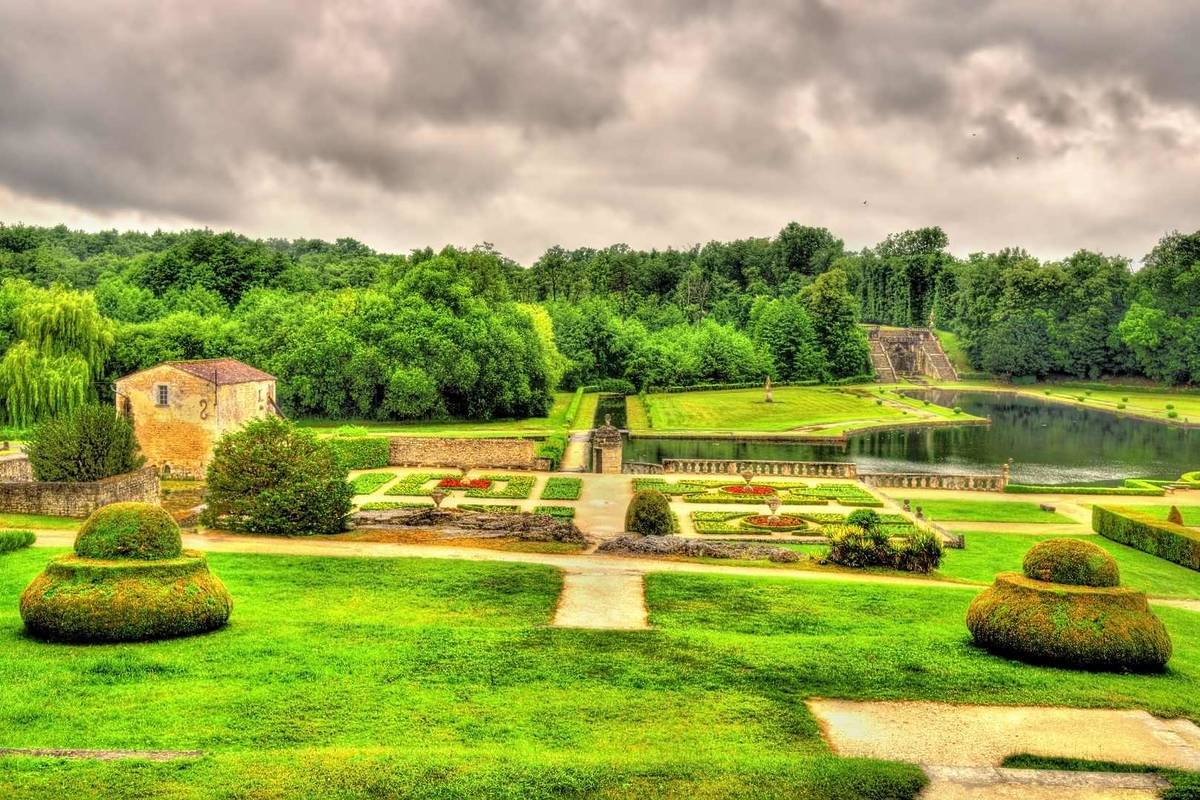
Thanks to the work undertaken, the estate was classified as a Historic Monument in 1946. Its gardens followed suit in 2004 and were awarded the Jardin Remarquable label. Symmetrical flowerbeds, colorful flowers, and sculpted boxwood: the French-style layout has been restored and enlarged for a majestic effect. Built on former marshland, maintaining them is a technical feat. To prevent the terraces from sinking into the mud, thousands of wooden piles support the structures and are regularly replaced. The estate also has an orchard and canals where the château is reflected like a mirror.
Venturing deeper into the forest, the path leads to an extraordinary archaeological site. Prehistoric caves, whose cavities were dug into the cliff, bear witness to human presence dating back more than 120,000 years. The remains on display in the castle museum reveal occupation during the Mousterian (-120,000 years), Aurignacian (-40,000 years), and Magdalenian (-10,000 years)periods . Further away, the woods still conceal evidence of the Gallo-Roman period, such as the walls of a village, Merovingian tombs and the remains of 11th-century walls. At that time, the place was known as Romette.
A visit to the estate for the whole family
With its rich and exceptional heritage, the castle attracts more than 40,000 visitors each year. The tour is designed to offer families a fun and educational experience. Children can enjoy an old-fashioned wooden playground where they can try their hand at Dutch billiards, stick games, or the “Bermuda Triangle.” For those who love a challenge, the château offersescape games in three immersive rooms steeped in history. Younger visitors can take part in a treasure hunt or a guided tour led by Eutrope the frog. Finally, outside, a themed trail on prehistory combines a walk in the forest with an exploration of the famous caves.
Not to mention the various events that regularly enliven the estate. From Easter egg hunts to medieval festivals and plays, there’s never a dull moment at Château La Roche Courbon.