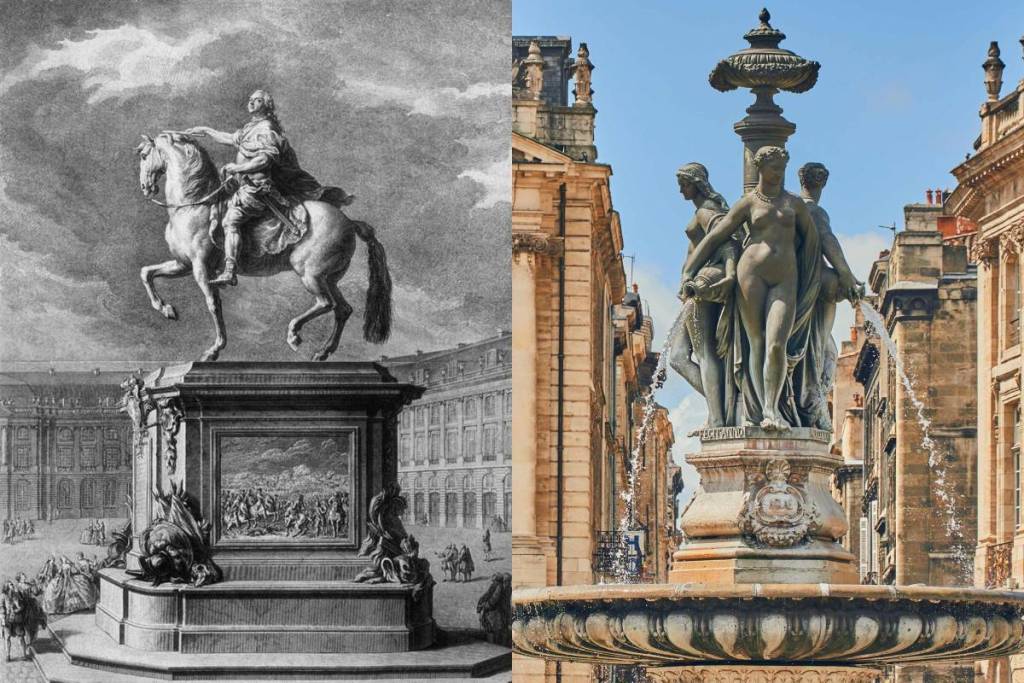

An iconic symbol of Bordeaux, the Fountain of the Three Graces has not always stood at the center of the Place de la Bourse. Where this allegorical masterpiece now stands, there once stood a large statue: a royal figure now fallen from grace, much like the monarchy it represented. Behind the charm of the three goddesses lies a tumultuous history spanning the monarchy, the Revolution, and the major urban projects of the 19th century.
Originally, a royal statue dismantled and melted down during the Revolution

Long before it became the backdrop for countless photos, Place de la Bourse celebrated royal power. Then known as Place Royale, an imposing equestrian statue of Louis XV was erected in its center in 1743. Dismantled during the Revolution, the statue was melted down in 1792, making way for a tree of liberty.
It wasn’t until 1828 that a fountain appeared. Much more modest, it was a temporary installation, a far cry from the majesty of the current monument. In the mid-19th century, however, Bordeaux set out to modernize its public spaces and increase the number of fountains. In 1853, the city selected architect Louis Visconti’s “Three Graces” design to adorn the Place de la Bourse.
Clad entirely in bronze, the fountain was inaugurated in May 1869. As an anecdote, its nudity provoked a reaction from the parish priest of Saint-Pierre, who had come to bless the work. He is said to have uttered this now-famous phrase: “I would have preferred to bless statues of saints rather than the breasts of statues.”
A legendary fountain rich in symbolism
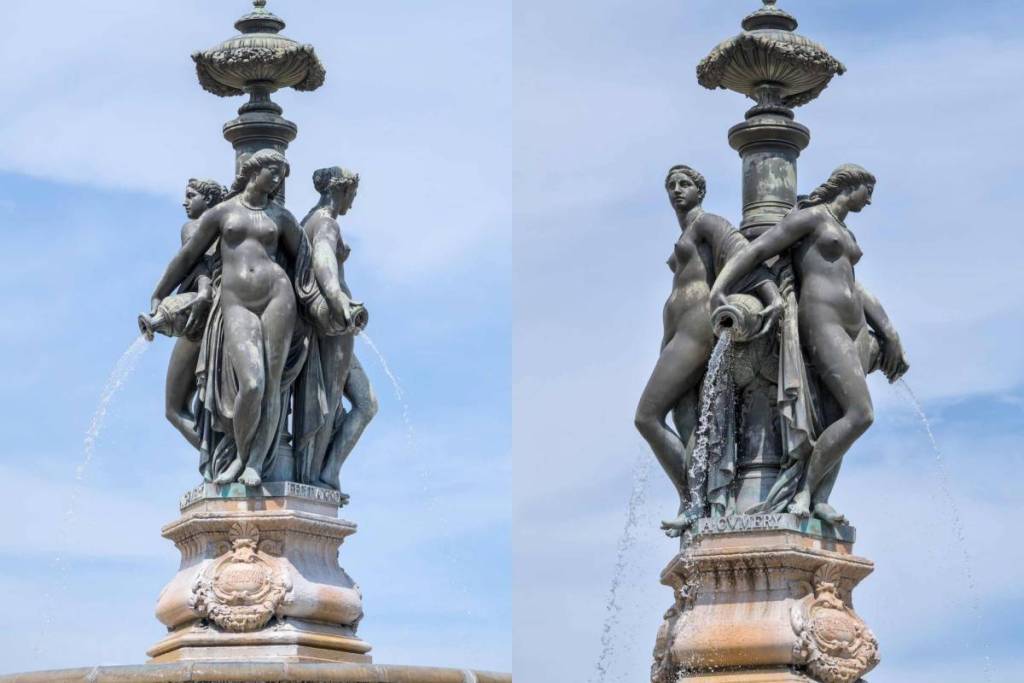
At the top of the monument, three women embody the Graces of Greek mythology: Aglaea, Euphrosyne, and Thalia. Associated with beauty, joy, and abundance, these deities lend a profound symbolic dimension to the entire structure. This choice is not insignificant. Following the removal of the royal statue, these figures offer a less political representation, celebrating instead harmony and prosperity.
The monument has since undergone several restorations. Stored in 2001 during construction work related to the tram line and underground parking garage, it disappeared from the square for five years. It returned to its original location in 2006, renovated and situated next to the Miroir d’Eau. Since 2009, it has also been illuminated in pink every October to raise awareness about breast cancer screening.
From a royal symbol to a Bordeaux emblem, the Fountain of the Three Graces has stood the test of time without losing its place at the heart of the city.