
Just a few kilometers from the Spanish border, a small village in the Basque Country looks like something out of a postcard. With its street lined with white and red houses, its peaceful atmosphere, and its spectacular views, Ainhoa checks all the boxes for the ideal Basque village. It is also one of the Most Beautiful Villages of France, a distinction that confirms what lovers of the region have known for a long time. About 2.5 hours from Bordeaux, this gem awaits you for a charming getaway.
Unspoiled charm in the heart of Labourd
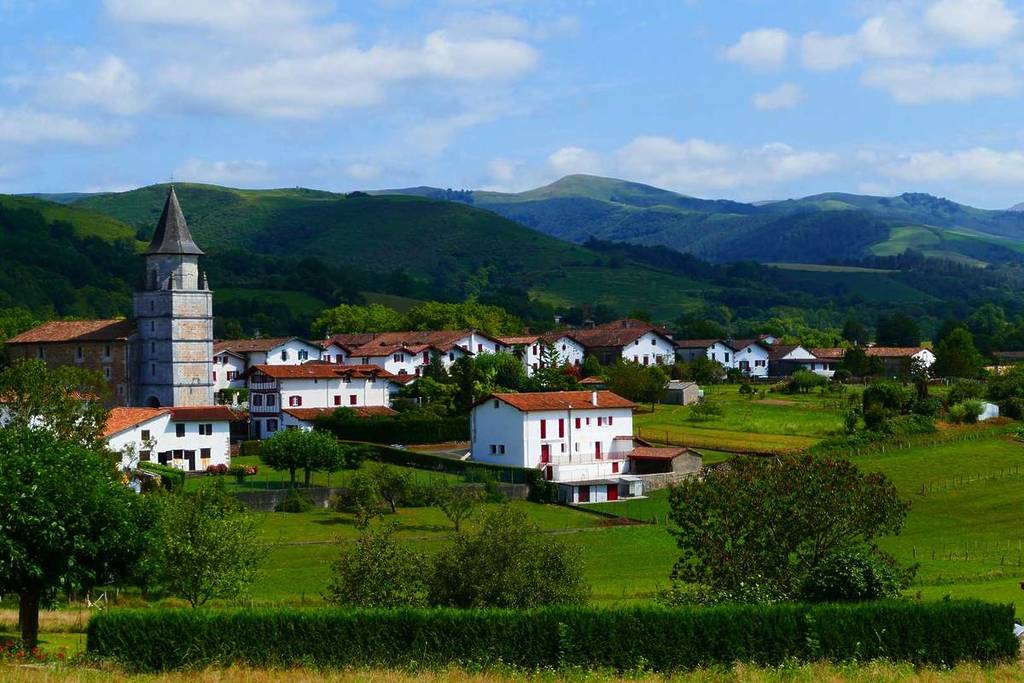
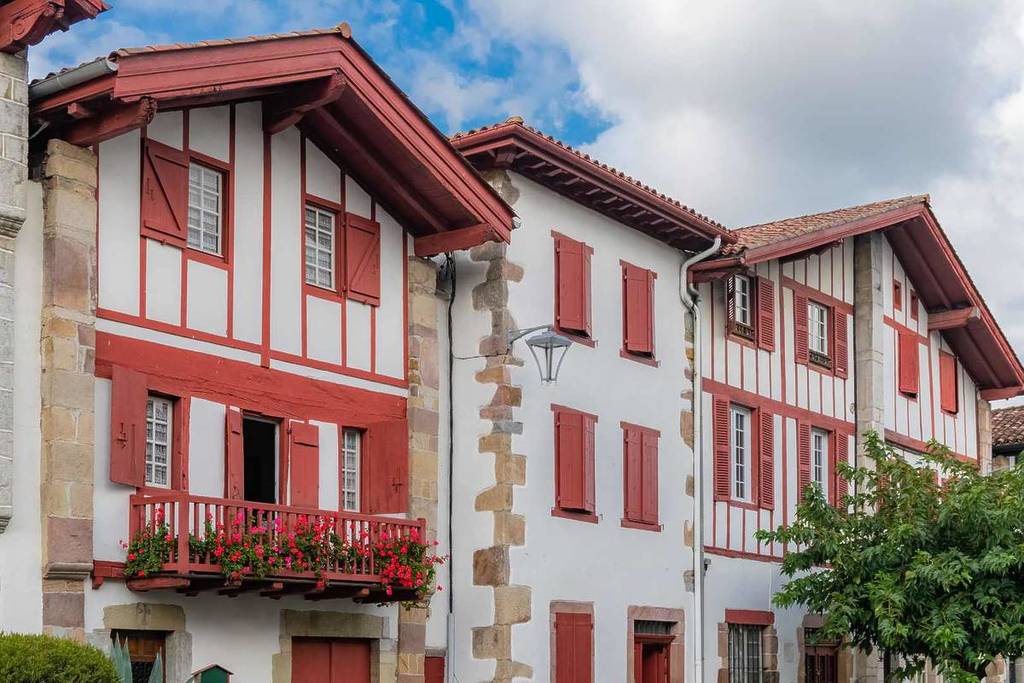
Located between Espelette and Sare, Ainhoa immediately charms visitors with its authenticity and traditional architecture. Nestled in the heart of lush green hills, the village is organized around a single wide street, lined with old Labourd houses featuring red, green, or brown half-timbered facades. While most were once family farms, their colorful facades now give Ainhoa a unique visual identity. In an atmosphere that is both gentle and lively, its small artisan shops and bustling terraces invite visitors to both stroll and explore.
A history closely linked to pilgrims
Before becoming one of the jewels of the Basque Country, Ainhoa was primarily an important stop on the Way of St. James. The village was founded in the 13th century by Premonstratensian monks to welcome pilgrims. At that time, only a few nomadic shepherds inhabited the surrounding area. Gradually, the village developed around this role as a welcoming center and became an essential stopover between Navarre and Labourd.
But its history hasn’t always been smooth sailing. In the 17th century, during the Thirty Years’ War, the village was set ablaze and almost entirely destroyed. Only one building escaped the flames: the famous Machitorenea House, still standing today. Dating back to 1629, it stands as one of the oldest reminders of Ainhoa’s past.
An octagonal bell tower and secret gardens
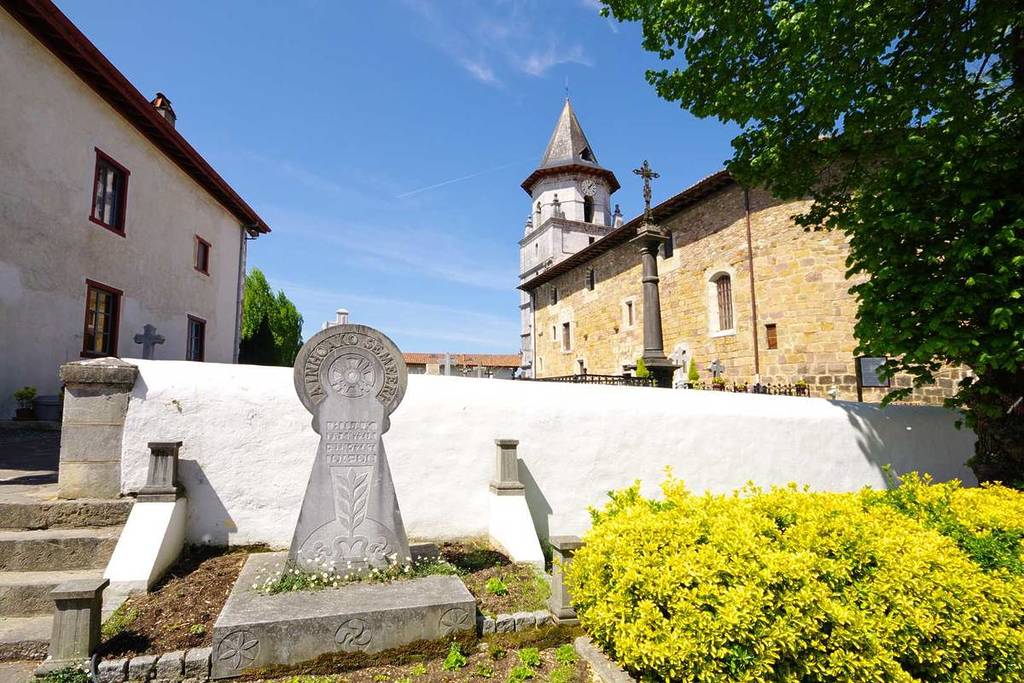
The history and soul of Ainhoa can be felt on every street corner, starting with the Church of Notre-Dame-de-l’Assomption, in the center of the village. Built in the Labourd style, it stands out for its octagonal bell tower and its interior wooden galleries, typical of the region. Inside, its gilded Baroque altarpiece immediately catches the eye.
Just a few steps away, the Alhaxurruta fountain is also worth a visit. This charming little wash house is said to have even captivated Napoleon III and Empress Eugénie during their visit in the 19th century.
Finally, perched on the heights of Mount Atsulai, the Notre-Dame de l’Aubépine Chapel offers one of the region’s most beautiful panoramic views. According to legend, the Virgin Mary appeared there to a young shepherd in a hawthorn bush. A perfect conclusion to a timeless visit.