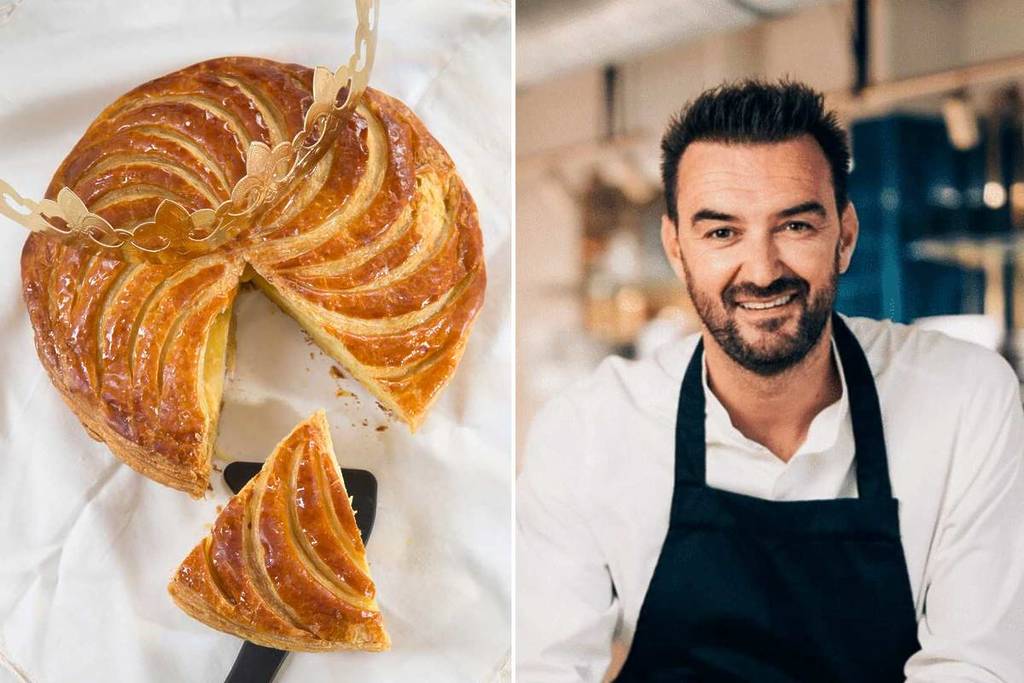
Even after the splendors of New Year’s Eve, between platters of oysters and cheese, the galette des rois still finds its way to our tables. Whether you’re an avid gourmand or a more reasonable eater, frangipane remains an irresistible temptation. To celebrate Epiphany this Tuesday, January 6, why not get behind the stove? With chef Cyril Lignac‘s authentic recipe, prepare a homemade galette that’s as simple as it is tasty, to delight all generations.
The recipe for Cyril Lignac’s galette des rois
Serves 4:
- 2 rolls pure butter puff pastry
- 2 egg yolks to brown the galette
Ingredients for the pastry cream
- 2 eggs
- 50g sugar
- 30g flour
- 25 cl milk
- 1 vanilla pod
Ingredients for the almond cream
- 3 egg yolks
- 125g almond powder
- 100g caster sugar
- 125g softened butter
Ingredients for the frangipane
- Pastry cream mixture + almond cream + 1 capful rum
Preparation of Cyril Lignac’s galette des rois
- Prepare the crème pâtissière. Whisk the eggs with the sugar until the mixture whitens.
- Add the flour and mix well.
- Split the vanilla pod in half. Remove the seeds and add them to the milk in a saucepan.
- Thicken over low heat. Cover with cling film and leave to cool for an hour.
- Prepare the almond cream: mix the softened butter and sugar until the mixture whitens. Add the egg yolks one by one, then the almond powder.
- Mix the crème pâtissière with the almond cream, adding a capful of rum, then pour the mixture into a piping bag.
- Using the piping bag, pipe a first layer, starting from the center in a spiral, then stop 2cm from the edge.
- Insert your bean into the cream, then brush the edge of the pastry with your egg yolk.
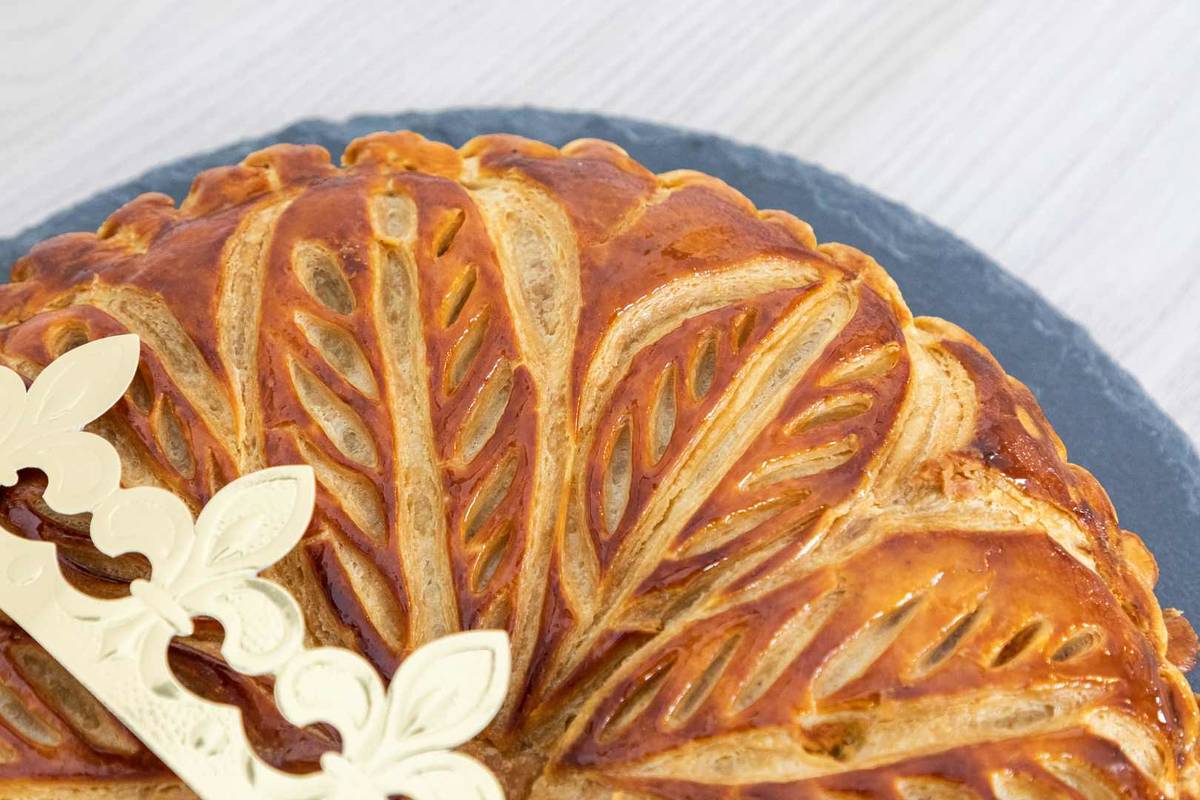
- Place the second pastry, closing the edges tightly. Brush the top of the galette with the egg yolk. Then draw ridges with a knife.
- Place in the fridge for 1 hour.
- Preheat your oven to 200°, place the galette in the oven for 10 minutes, then lower the temperature to 180°. Continue baking for approximately 30 minutes.
Crown or galette des rois?
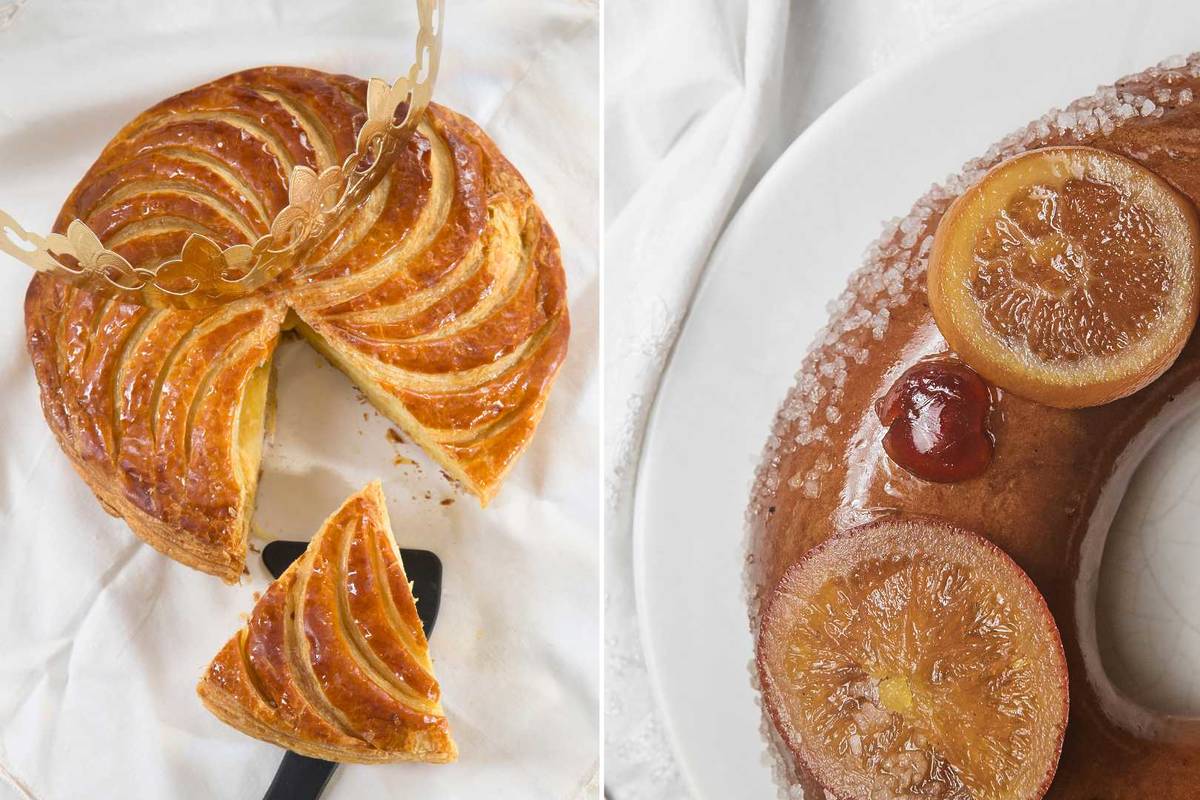
Although Epiphany today commemorates the visit of the Three Wise Men to Bethlehem, its roots actually go back to Roman antiquity. During the Saturnalia, the pagan celebrations linked to the winter solstice, the Romans already ate a golden cake in the image of the sun. The game of the bean already existed: it even allowed a slave to become “king” for a day.
The history of the famous frangipane is more mysterious. Some attribute it to Count Cesare Frangipani, who passed it on to Catherine de Médicis in the 16th century. Others see Jacqueline de Septisoles, linked to the Frangipani family as early as the 13th century, as the true creator of these almond sweets. As for the crown shape, this is certainly a Christian heritage symbolizing the royalty of the Magi. Whether flaky or brioche, this pastry remains the undisputed emblem of winter sharing.