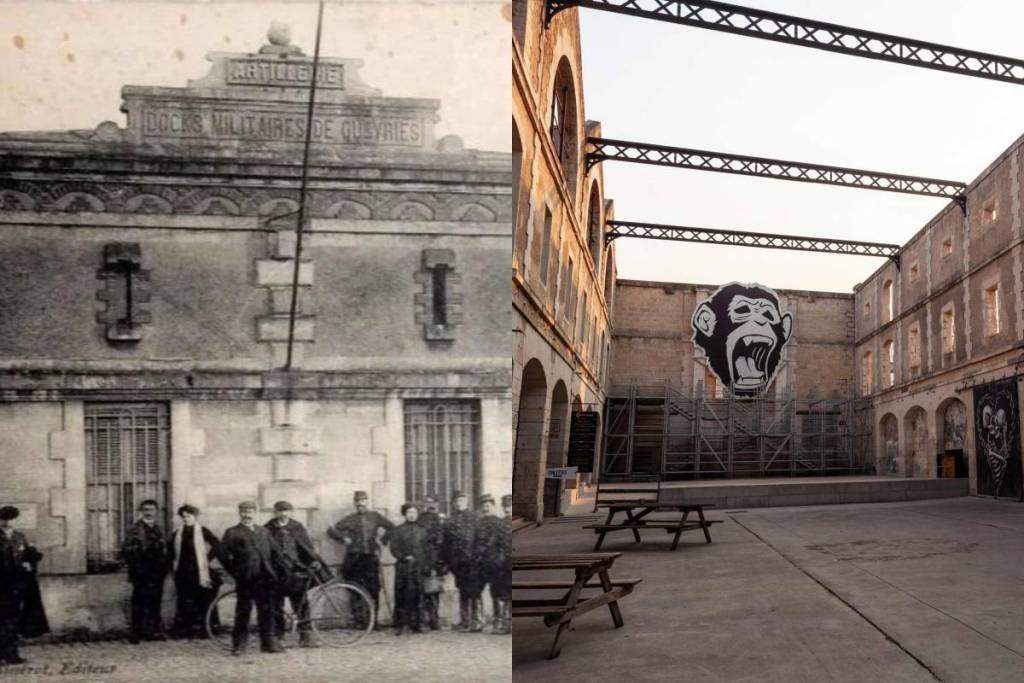

An urban space dedicated to ecology, civic activism, and social entrepreneurship… It’s hard to imagine that Bordeaux’sDarwin Ecosystem was once a military site. And yet, behind its cafés, workspaces, and walls covered in street art, lies a history dating back more than 150 years. A look back at the surprising transformation of this iconic spot on Bordeaux’s right bank.
The military barracks that were occupied by the German army
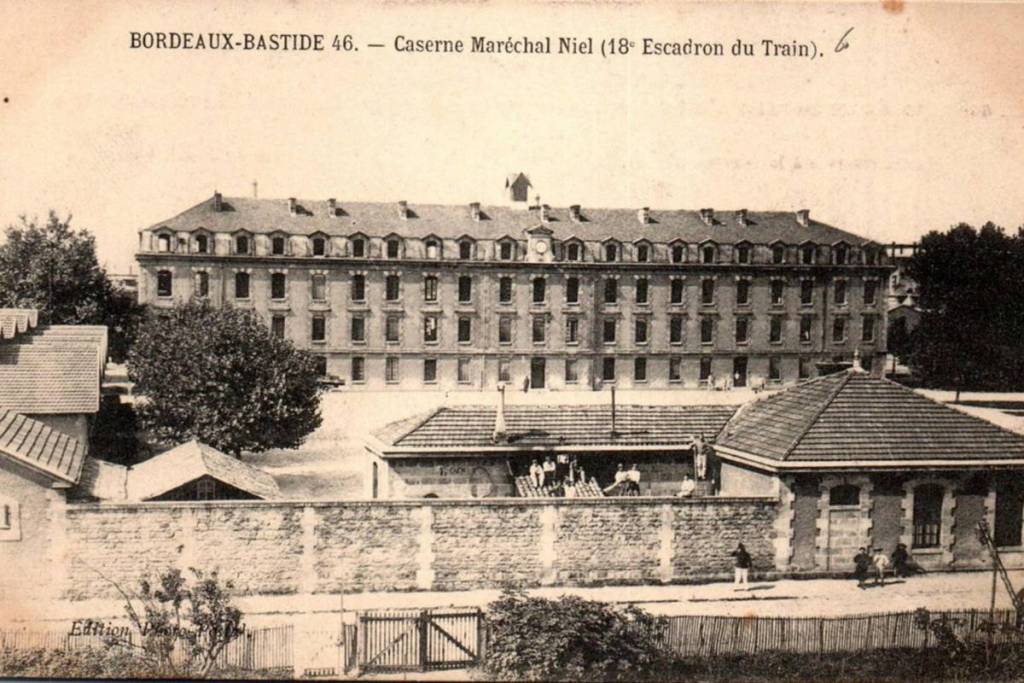
The history of the Niel Barracks begins in the 19th century. In 1874, the government acquired a large plot of land located between the Quai des Queyries and the surrounding streets. The goal at the time was to consolidate several military units that had previously been scattered throughout Bordeaux.
Two existing buildings housed, in particular, the Artillery and Quartermaster’s departments. Then, at the rear of the site, a new military complex was built. Completed in 1877–1878, it was named after Marshal Adolphe Niel, Minister of War under the Second Empire.
Its history is also marked by the dark hours of the 20th century. After France’s defeat in 1940, the barracks were occupied by the German army. In particular, they served as a detention center for prisoners of war. Among them were several thousand Spanish Republicans, forced to perform hard labor in the region.
From Military Wasteland to the Darwin Ecosystem
When the military finally left the premises in 2005, the barracks became a vast urban wasteland. Little by little, the abandoned buildings attracted artists and street art enthusiasts, giving the site a new identity. The future of the former Magasins Généraux was then uncertain, and the site was even slated for demolition as part of the Bastide Niel project. Opposing the demolition, the Darwin Evolution group, local residents, and community organizations rallied to preserve this heritage site.
Between 2009 and 2024, the government secured the purchase of the northern buildings and then the contract to renovate the southern Magasins Généraux. The Darwin project then took shape with the clear goal of reinventing the site without erasing its history. The 19th-century buildings became the backdrop for an ecosystem focused on responsible business practices and innovation. Today, this eco-rehabilitated space welcomes nearlyone million visitors a year, dozens of businesses, an indoor skatepark, and the largest organic restaurant in France.
A site once dedicated to the military has become a testing ground for envisioning the city of tomorrow. More than just a repurposing, Darwin thus tells the story of an astonishing evolution.