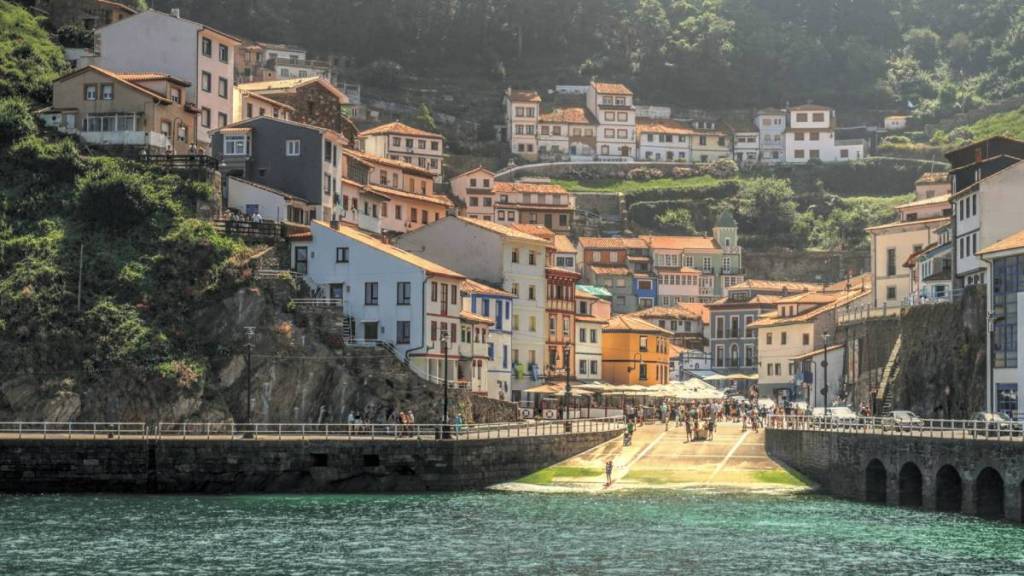

Nestled in a cove so narrow that its houses had no choice but to pile on top of one another, Cudillero, a small village in Asturias, surprises at every turn: a tiny fishing port surrounded by pink, blue, and yellow facades, wedged between the sea and the mountains. It immediately brings to mind the villages along the Italian coast. Except that we’re actually in Spain, at the northwestern tip of the country.
A typical day in the streets of Cudillero
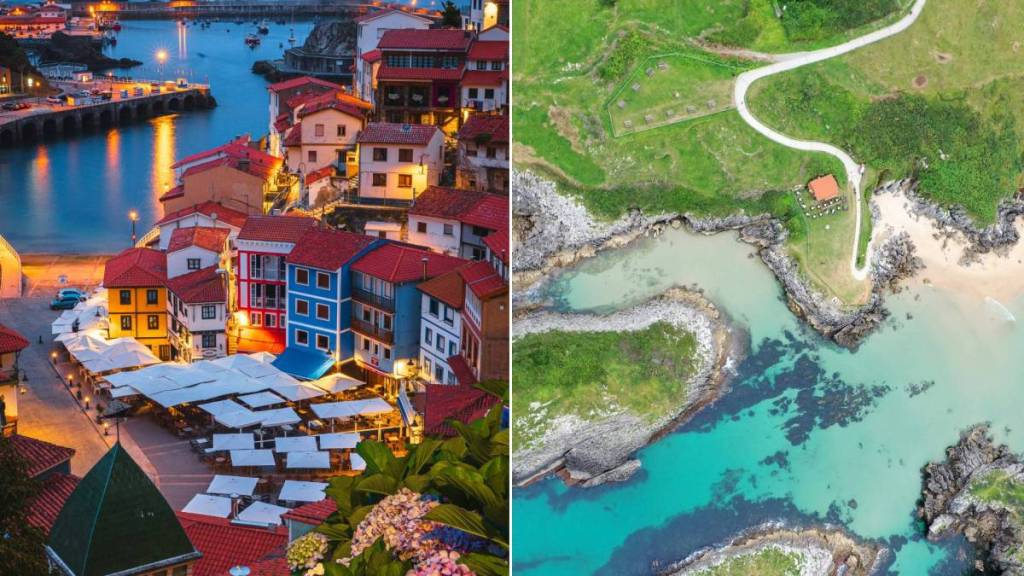
We start with a leisurely stroll around the harbor, past the colorful fishing boats and restaurant patios, before gradually making our way uphill while the narrow streets are still quiet. A network of narrow, steep paths leads to several viewpoints, the best known of which are La Garita and La Atalaya. From up there, the view takes in the entire amphitheater-shaped village, the harbor, and the lighthouse that watches over the entrance to the cove—enough to fill up a roll of film in just a few minutes.
An unusual surprise! On the way to the viewpoints, a house with a facade entirely covered in seashells is tucked away in an alley on Fuente del Canto Street. Few visitors notice it, even though it’s just a few meters off the main path. It’s like a real treasure hunt!
After lunch at one of the village’s sidrerías , head to Playa del Silencio for the afternoon: a secluded beach nestled between steep cliffs. You reach it via a dirt path followed by a ten-minute walk —and the reward is well worth the effort: a virtually untouched cove, still spared the crowds of the region’s more accessible beaches.
To end the day on a high note, head back to the village’s lookout points just as the sun begins to set over the ocean; the colorful facades then take on a breathtaking golden hue.
A dialect of Viking origin and a 500-year-old linguistic ritual
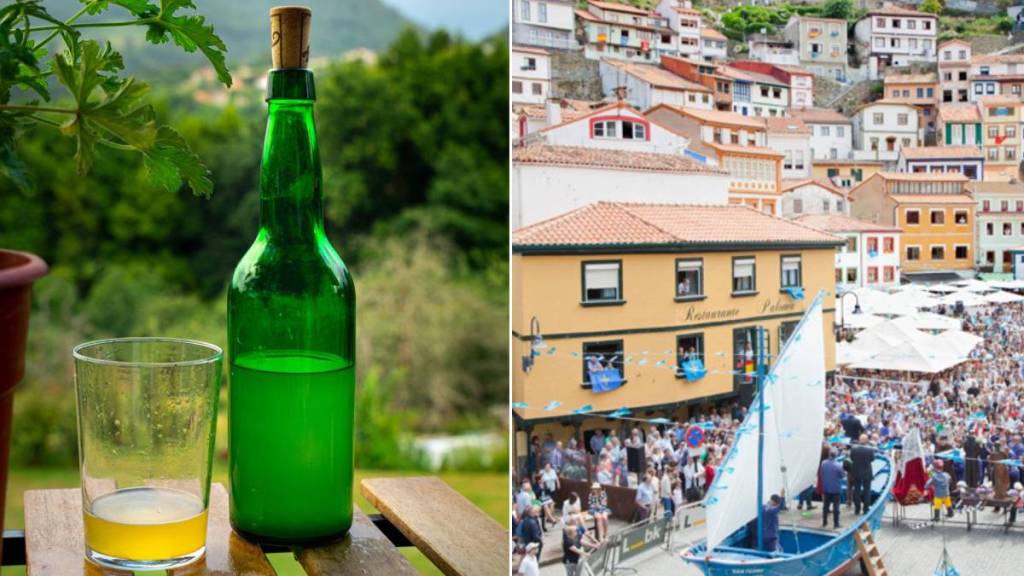
The village’s residents call themselves“pixuetos” and speak their own dialect, Pixueto, whose origins are said to be linked to ancient Viking settlements along this coast, according to local legend. Every June 29, Saint Peter’s Day , this dialect takes center stage during a unique ritual: the Amuravela, a satirical speech recited from a boat moored in the harbor, which summarizes the year’s notable events with a touch of irony. This tradition, dating back more than five centuries, is now recognized as a festival of national tourist interest.
Another cornerstone of the local identity— sidra. This alcoholic beverage is traditionally poured from a height, with the arm outstretched above the head, to aerate it before drinking it in one gulp—a gesture seen in every sidrería in the village, often accompanied by seafood freshly unloaded at the harbor. Three must-visit spots: Sidrería El Remo, renowned for its rodaballo (turbot); Casa Mari, one of the village’s historic sidrerías, known for its cabrales croquettes and zamburiñas; and Casa Julio, on the Plaza de la Marina, for its seafood platters to share!