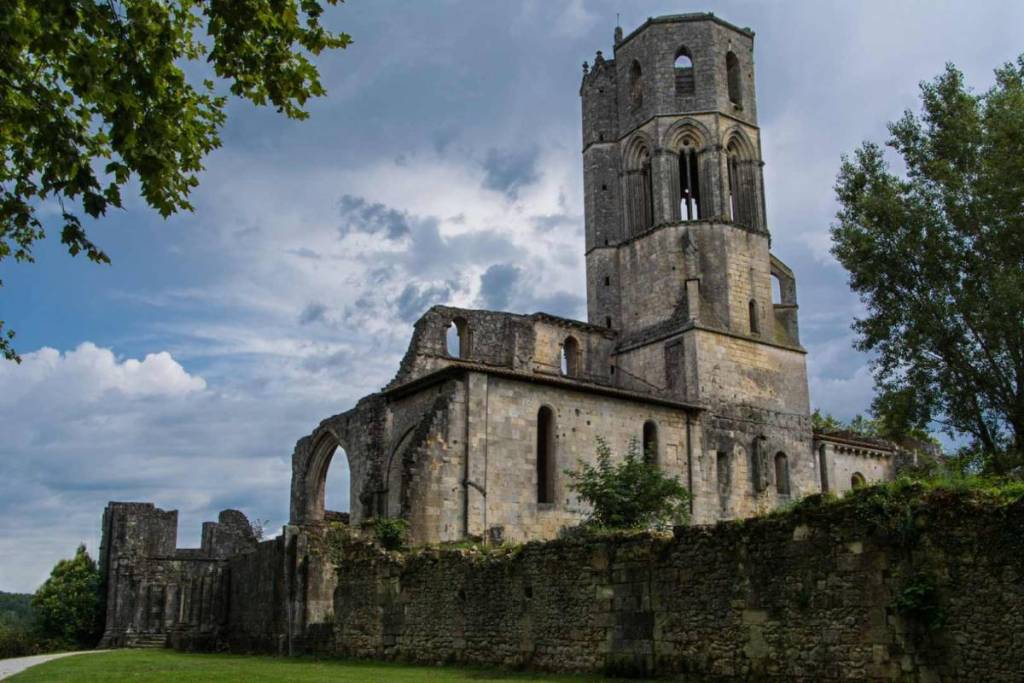

Just about thirty kilometers from Bordeaux, the ruins of an abbey emerge amid ancient stones, vegetation, and enigmatic sculptures. Listed as a UNESCO World Heritage Site,the Abbey of La Sauve-Majeure captivates visitors with its Romanesque architecture and stunning sculpted decorations. This thousand-year-old monument offers a timeless escape steeped in mystery.
A timeless site
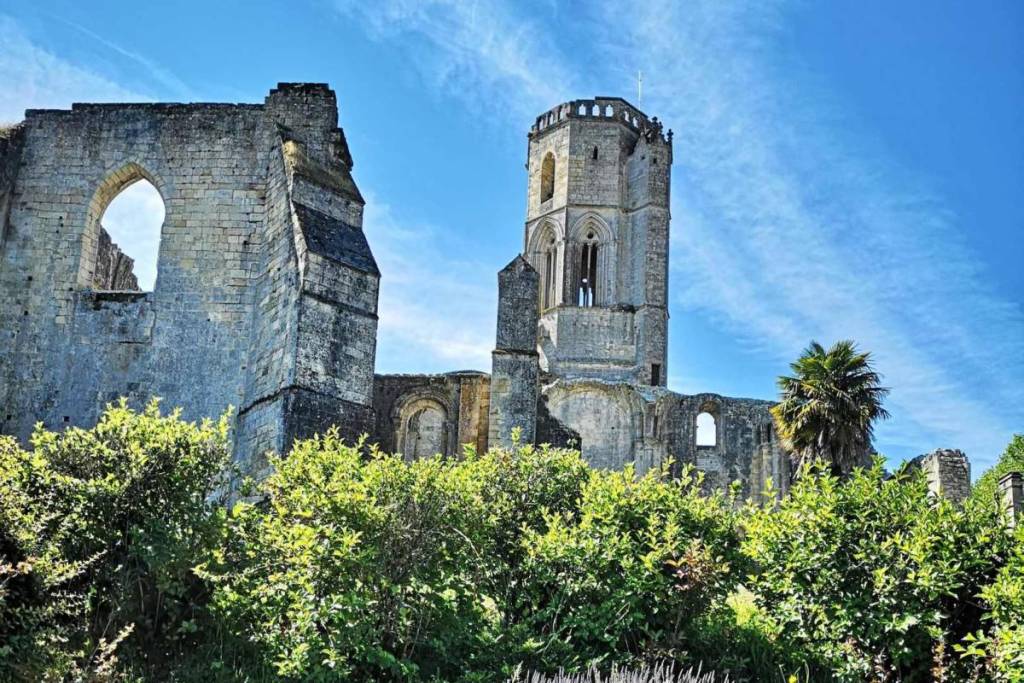
Located between the Garonne and Dordogne rivers, the abbey owes its name to the vast forest that once surrounded the site, then known as Silva Major, the “great forest.” Today, its ruins still stand in the heart of a natural setting that contributes greatly to its unique atmosphere.
Founded in the Middle Ages, the abbey stands as a remarkable example ofRomanesque art in the Gironde region. Its walls, arches, and various monastic buildings can be explored outdoors, in a landscape where vegetation intertwines with centuries-old stones.
The site is also listed as a UNESCO World Heritage Site as part of the Routes of Santiago de Compostela in France.
A Mysterious Carved Bestiary
One of La Sauve-Majeure’s treasures lies in its carved decorations. Human figures, animals, and astonishing creatures seem to tell stories of days gone by.
These sculptures actually served an educational purpose. In a society where a large portion of the population could not read, they helped convey the fundamentals of the Christian faith. The scenes depicted thus evoke the pursuit of goodness, redemption, and the dangers of sin.
Even today, this medieval bestiary continues to fascinate with the diversity of its depictions. As Halloween approaches, these fantastical animals and enigmatic figures lend the site a particularly mysterious atmosphere.
157 steps to the top
To discover the abbey from a different angle, why not climb a little higher? After climbing the 157 steps of the bell tower, a 360-degree panorama of the Entre-deux-Mers unfolds before our eyes.
From this vantage point, you can clearly see the layout of the former abbey and its various areas:the cruciform church , the transept, the choir, the cloister, and the buildings once dedicated to monastic life.
Beyond the monument, the view stretches out over the vineyards, valleys, and forests of the Entre-deux-Mers region. In the fall, the colors of the landscape further enhance the charm of this medieval setting.